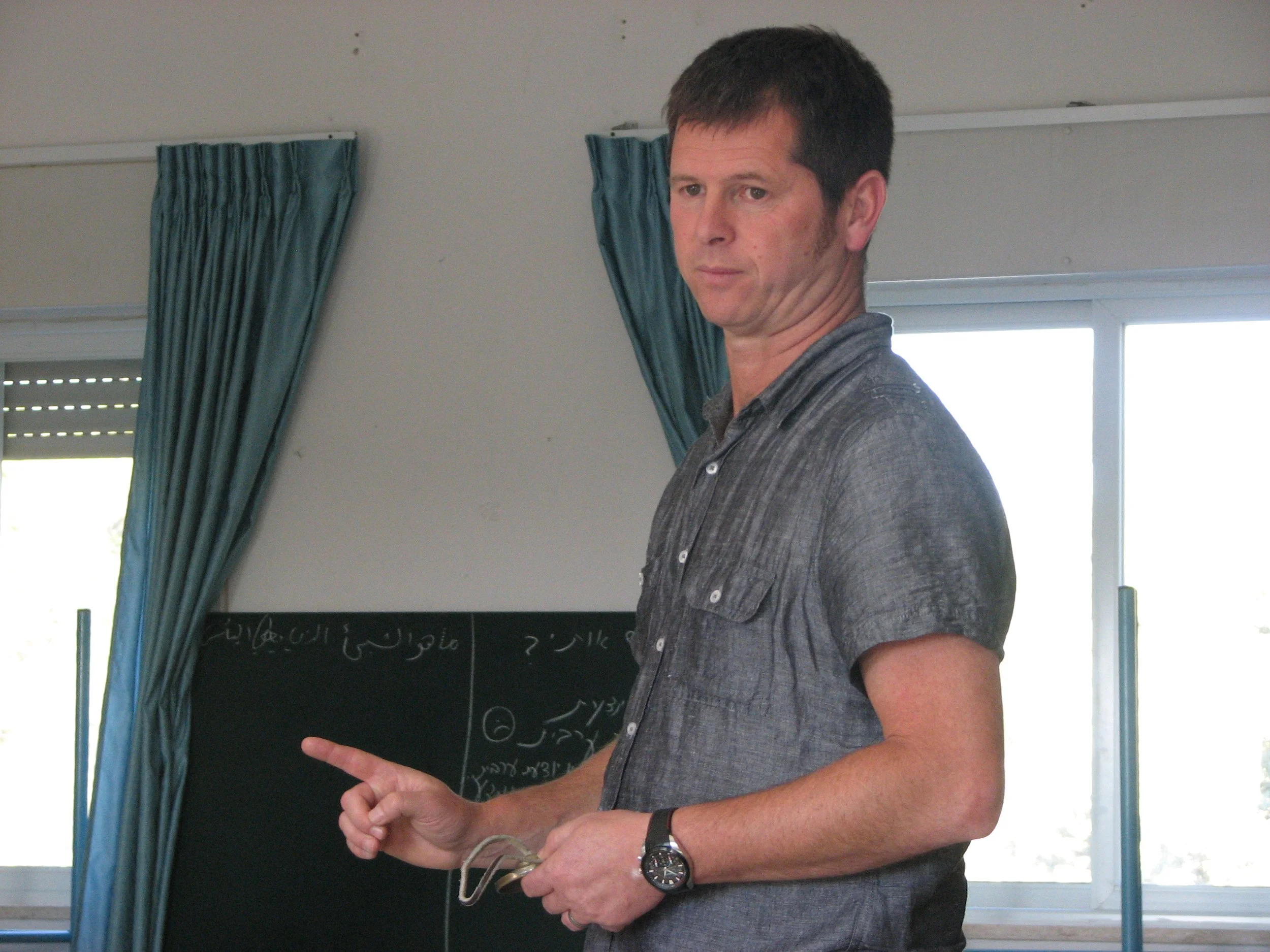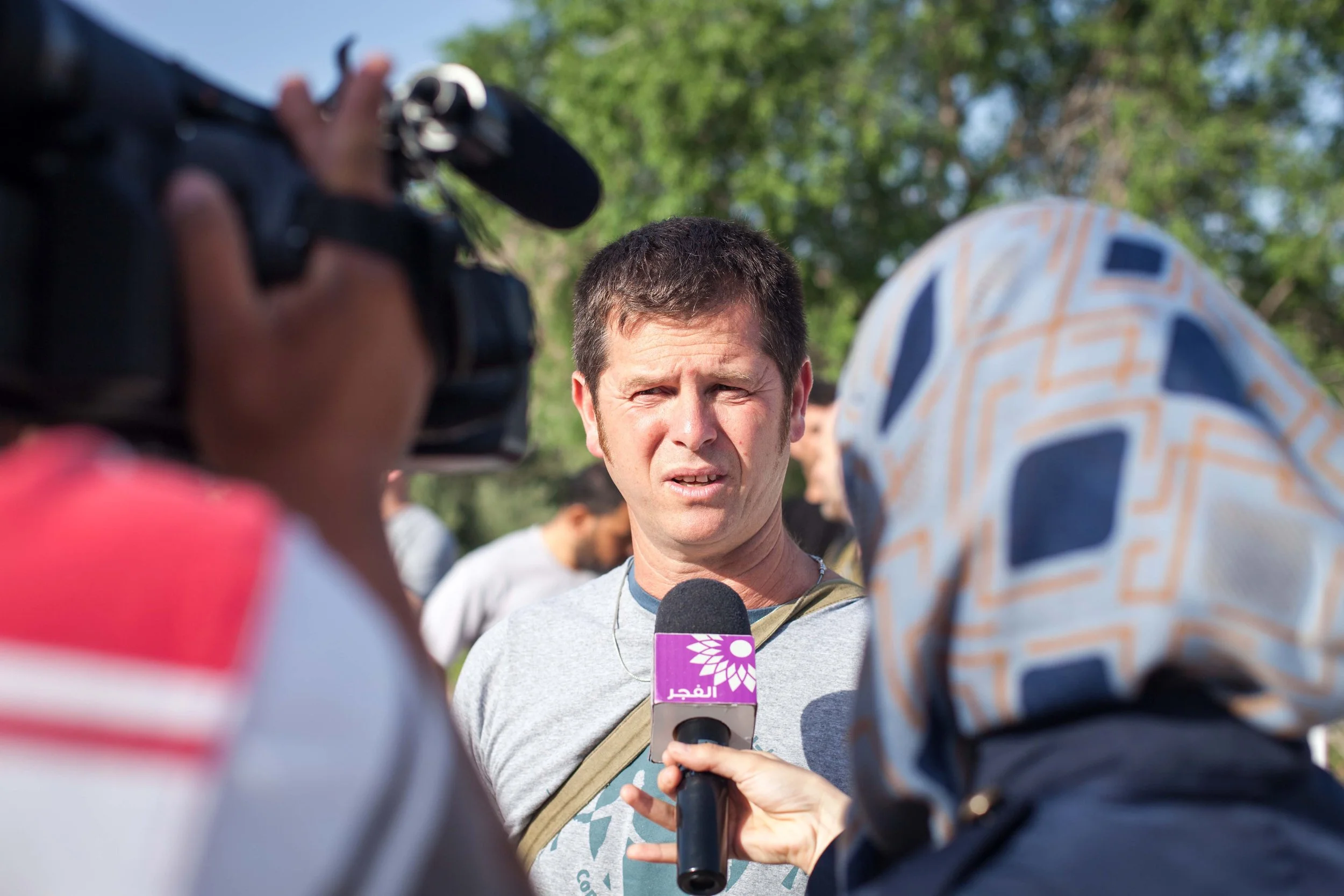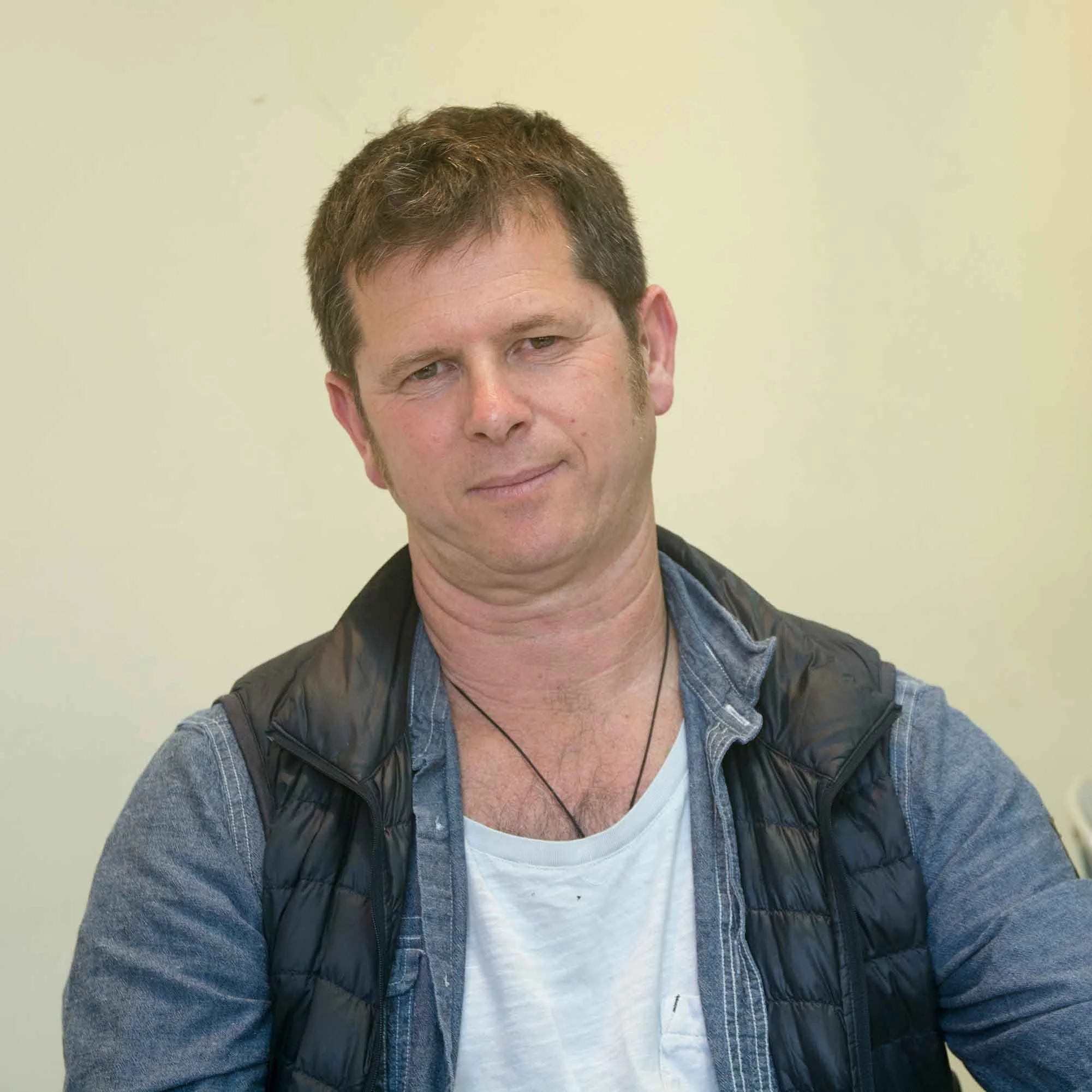
Ben Yeger
“‘I don’t care as long as he is dead,’ the officer told me. This was my wake-up call.”
I was born in England in 1964 to Jewish parents. In the first years of my life, I was not brought up with any awareness of Israel as part of my identity. Up until 1972, when my family moved to Kibbutz Givat Haim Ichud, next to Hadera. Kibbutz upbringing was a confusing combination of egalitarian socialism in which everyone must have freedom of expression and their human rights intact, and the assumption that serving and becoming highly ranked leaders in elite military units was fully expected. So Socialism mixed with nationalistic Zionism was the general political stance in the kibbutz.
The fear and knowledge of the existence of an enemy was directed at all people who were defined as “Arabs.” This included those who were coming to build houses and work the land, as well as football teams we were playing against. I had no knowledge of Palestinians, the West Bank, Gaza or the occupation. I was simply taught that Israel was surrounded by Arab states who wanted to annihilate the Jews and “throw us all into the sea.”
A year after we arrived in Israel, the Yom Kippur War broke out, and this idea that we had an enemy who was trying to kill us became even more concrete.
In 1983, at the age of 19, I volunteered to serve as a paratrooper in the Nahal unit of the Israeli military. The First Lebanon War had just started and this is where I spent most of my time on duty.
One of the first experiences I had in Lebanon was at Ansar 1, a makeshift prison for Palestinians who were deemed as terrorists. This open air prison was literally a very large crater in which these young men were placed, living in abject squalor 一 with no proper sanitary arrangements, very basic food and mostly exposed to the weather whatever it was. During one of my shifts I started to wonder “Who were these young men, who looked just like the ‘Arabs’ I saw in Israel on a daily basis? What had they done to end up in such horrific conditions?”
When these questions were spinning in my head, I could hear an even louder voice inside, saying: “They are your enemies and you must not think of them as humans in any way.”
Towards the end of my service, my unit was tasked with going into villages in South Lebanon to “flush out” any remaining “terrorists.” During one of these operations, I was asked to guard a man who had been identified as suspicious. Other soldiers had loaded him into a van to take him away for questioning. This man, sitting right in front of me, had his head covered with a sack, his hands and legs cuffed, and he was shivering with fear. An officer turned to me and told me that I was allowed to shoot the man if he were to move in a way that I would deem dangerous. I responded that if I were to shoot him, I would undoubtedly also kill the driver, who was right behind. “I don’t care as long as he is dead," the officer told me. This was my wakeup call.
In 1986, I left Israel and returned to England. I promised myself not to carry a gun again. Over the next 20 years I embarked on a long journey of healing 一 through therapy, movement practice and more 一 to try and understand the impact on myself of my time participating in the cycle of violence.
On one occasion, I was invited to participate in a fire-walking ceremony for which one needs to find their purpose in the world on personal, interpersonal and wider levels. After some time, mine landed: “End the conflict inside of you, with your wife and in Israel/Palestine.” As I walked up and down the hot coals, I called out this mantra and felt my heart expand and strengthen. The following morning, a fellow fire walker handed me the contact of Chen Alon, one of the co-founders of Combatants for Peace. So I wrote to him in 2007 and we met three months later at Tel Aviv University. I was so relieved to find other Israelis feeling like me.
I joined CfP’s binational nonviolent actions and met with Palestinians from the West Bank for the first time. They helped me start my journey of personal transformation. Palestinians are not my enemy, they are my brothers and sisters and want just the same as me: freedom, human rights and health for themselves and their families. Sixteen years on, this journey continues.