Noa Harell
“I felt that my country was undergoing a process of social and moral deterioration, and that there was nothing I could do about it.”
I was born in Israel into a family that politically was almost entirely oriented to the left. Members of my family were among the founders of Peace Now, while others were, and still are, left-wing politicians and activists. I have always shared my family’s opinions as part of my identity, but never really took action.
During my military service, I did not encounter Palestinians at all. I served in the Navy as a sailing instructor in the Naval Officers’ Course. Every four months, we were sailing Zodiacs along the coastline as far as Tel Ridan, at the southern end of the Gaza Strip. Even there, we did not encounter Palestinians when we were reaching the shore. I saw my military service as a period in which I was doing my part for an army that was supposed to be “defensive” against our enemies. The rights of Palestinians simply did not come up in any conversation I was part of. The occupation was for me something almost theoretical that we had to deal with.
In the years that followed, I still took almost no part in political or peace activities. I was deeply disappointed with the left-wing parties and voters, who seemed to me passive, defeatist, and mostly good at complaining. I even avoided defining myself politically. I felt that my country was socially and morally deteriorating, and that there was nothing I could do about it.
In December 2016, the film “Disturbing the Peace” that follows Combatants for Peace activists was released. I was invited by my aunt to watch it with her, but I had no idea what it was about, or who Combatants for Peace were.
Watching the film was a jaw-dropping experience for me. I did not know that another way already existed — a way based on dialogue between ordinary people, rather than between political leaders. I saw this group of ordinary people who had actually crossed the lines and done it. This screening marked a before and an after in my life.
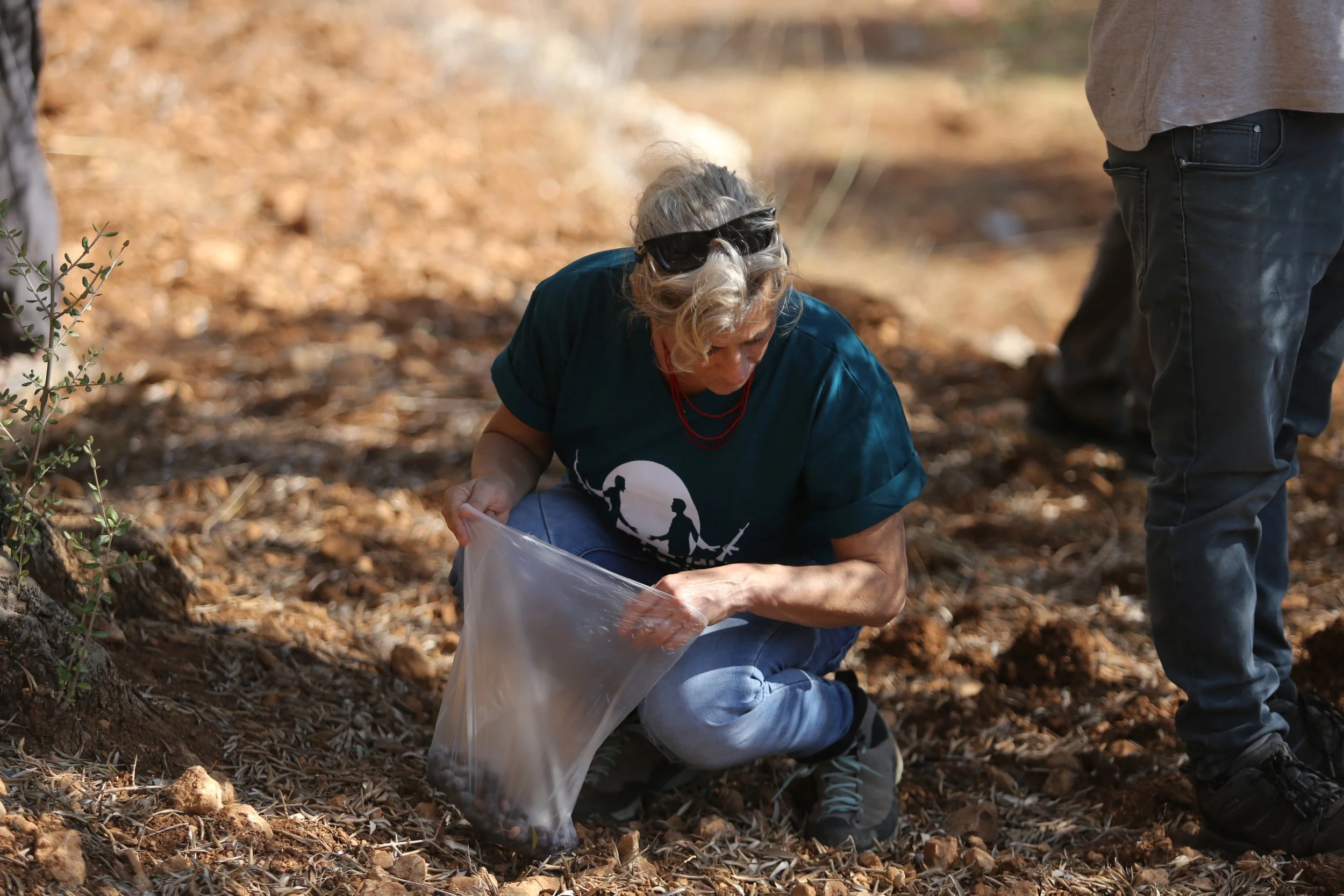
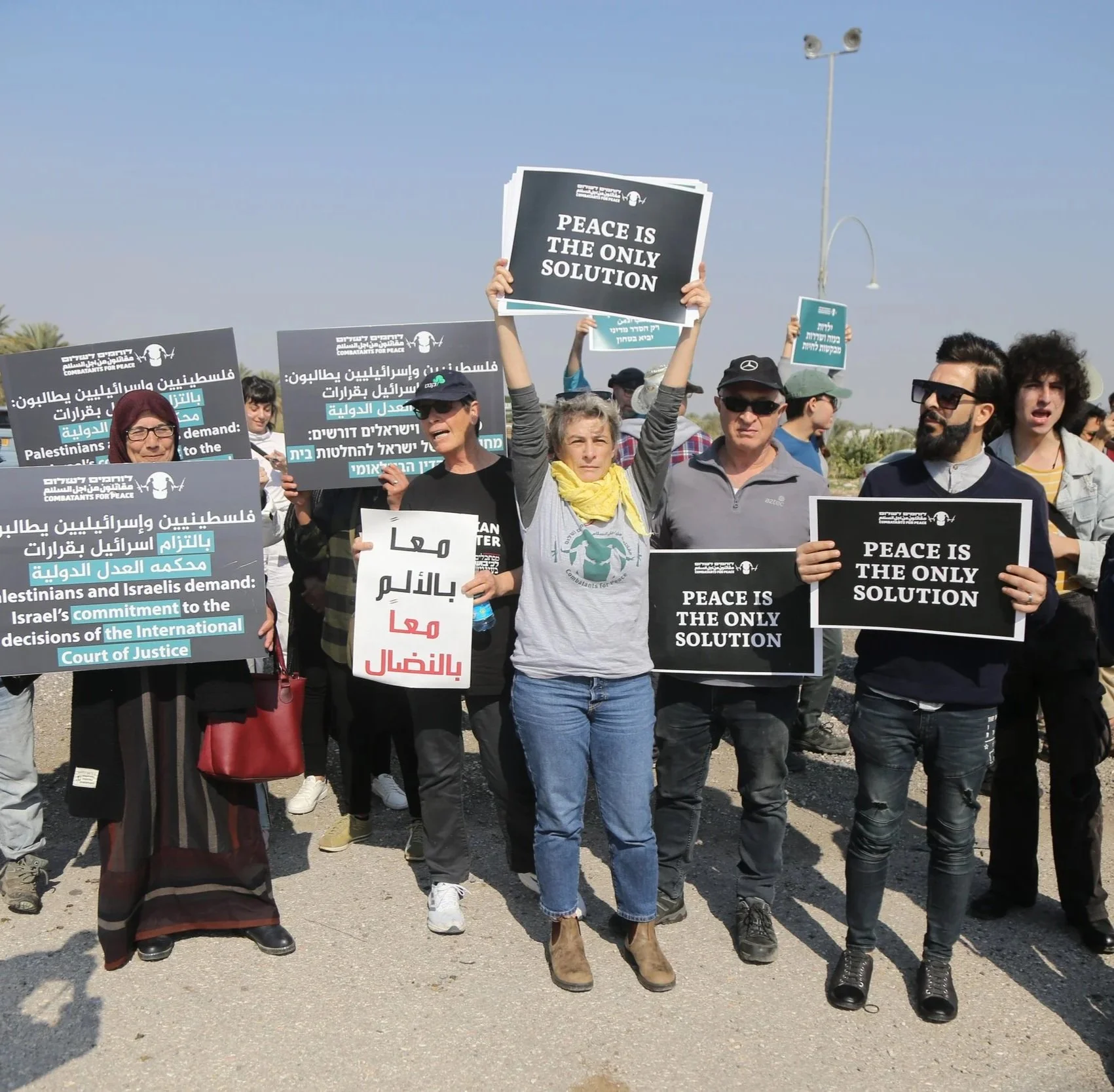
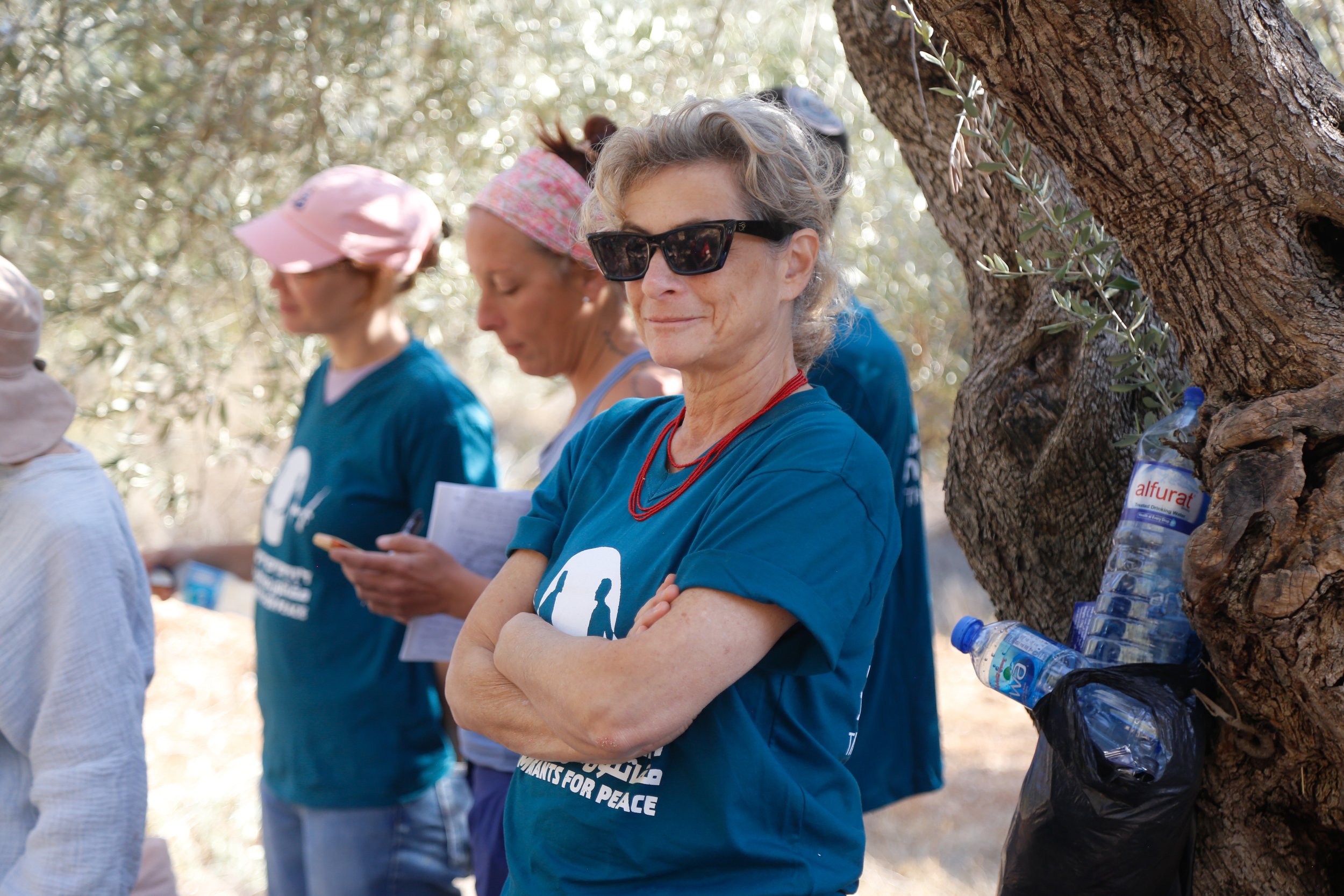
I immediately knew I had to join, take action, and participate. I no longer had the option to remain passive. For the first time at the age of 50, I had the chance to meet Palestinians. I joined the movement’s activities: joint meetings, demonstrations, olive harvests, protective presence, and volunteering at the Joint Memorial Ceremony.
Getting to know Palestinian gave me a sense of solidarity in our shared struggle to end the occupation. I came to understand that while the current situation is devastating for Palestinians, it is also deeply destructive for Israelis, and that we will not be able to live in security as long as Palestinians live under occupation.
In October 2023, my involvement in the movement took a rather dramatic turn. On October 4, I was informed that I had been accepted onto the movement’s staff as the new Israeli General Coordinator. Three days later, our lives changed, and the reality around us seemed to be on the verge of collapse.
I spent the next two years in this role working to protect and sustain the important work we had built, to create spaces for sharing and mutual support in the face of the horrifying reality, to organize joint demonstrations against the war in Gaza and against the surge in settler violence in the West Bank, and to make our voice heard, clearly and unequivocally, in Israel and around the world.