Galia Galili
“I could no longer identify with what was being done in our name. I wanted to do something and no longer remain passive.”
I grew up in a household of many contrasts. My mother was born in Scotland, and her mother was born and raised in Jaffa, and defined herself as Palestinian. Her father was British and didn’t know Hebrew even after spending 30 years in the land. They were a well-off Jerusalemite family, so my mother grew up in a wealthy, liberal and very left-wing household.
My father grew up in Rabat, Morocco. His father was an ardent Zionist and in 1956 organized the migration of 60 Jewish families from Morocco to Israel. My father arrived when he was 13, and all throughout his childhood he fought for his right to keep studying (many of his peers in the moshav were sent to work). Despite financial difficulties bordering on poverty, he became the first doctor of Moroccan heritage in Israel.
Politically, he was right-wing. “I grew up with Arabs, and I am telling you they can’t be trusted” he used to claim, very differently from my mother. It is probably because of this division that I avoided politics. I was not interested and did not know what was happening.
I grew up in Jerusalem, and we played with the Palestinian kids in the East Jerusalem neighborhood of Silwan - we would ride donkeys together. As a kid I knew Palestinians, I did not think they were different from me aside from their economic situation; but when they would come back with me to our neighborhood, my dad would get very upset.
During the Second Intifada my brother was a medical student and worked in a hospital in the center of Jerusalem. As part of the rescue teams, he was among the first responders who aided the victims of the horrific terror attacks. These encounters with horror and pain deeply affected him, as well as me.
I began showing interest in anti-occupation politics, becoming somewhat involved with left wing organizations and joining protests.
During Operation “Protective Edge” in 2014 I already started feeling disconnected from this country, that I could no longer identify with it. I felt that I had to do something — that this is my country and its actions are carried out in my name. I could no longer remain passive.
After joining a few left-wing organizations, I still felt as though I was not active enough. It felt like I was only resisting, not doing anything to actively build an alternative. I realized that if I wanted a different future for my children, I would have to take a more practical and meaningful role in the struggle for peace.
At the end of 2018, my eldest son had to join the military. I wanted him to defend our country, not attack and oppress another people. That is not a reality I am willing to live in, and surely not sacrifice everything I hold dear.
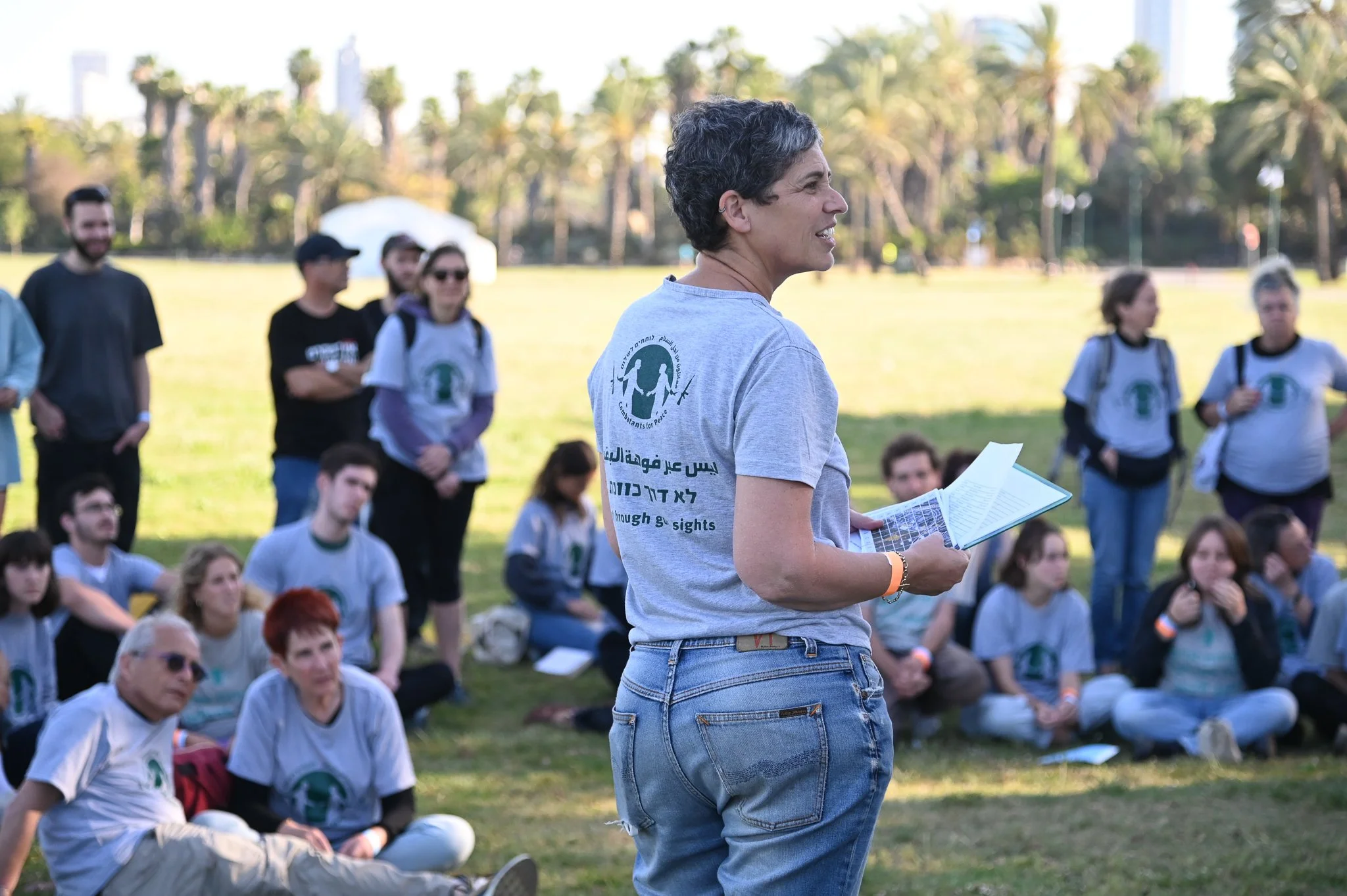
That is how I came to Combatants for Peace: a place where everyone, from both sides, takes full responsibility for our reality and works shoulder to shoulder with our natural partners in this mission.