Avner Wishnitzer
“When I understood that the oppression was indirectly mine too, I could not shake off my responsibility in it.”
I was born in Kibbutz Schiller near Rehovot. Where I grew up, combat service was considered not only a patriotic duty but also an important personal test. So, as my conscription date approached, I chose to prepare for enlisting in the Israeli army’s special forces. After passing the tests and finishing my training, I served as a combatant. My compulsory service ended in 1998.
Throughout my childhood and my military service, I had no contact with Palestinians, and I was not exposed in any way to the realities of military rule in the West Bank.
Although I always opposed the Israeli occupation of the West Bank, it was almost a theoretical opposition. The whole issue seemed distant and only loosely connected to my personal reality.
However, during the Second Intifada, I started to see things differently. I felt that the common impression that the events of the early 2000s left in Israeli society was too simplistic and that the story could not be so one-dimensional. I wanted to see the reality with my own eyes. For the first time in my life, I joined political activities in the West Bank, where I encountered the reality of military rule — not as a passenger looking out of the vehicle window, or through images on the news, but this time, with faces and names.
Until that point, it was convenient for me to narrow down the occupation to a cluster of isolated wrongdoings — such as uprooting olive trees or the illegal construction of temporary housing on private Palestinian land. It was convenient for me to think of it as something done only by a few settlers.
I started to perceive the Israeli occupation of the West Bank as an extensive system of oppression, dispossession and systematic settlement which could not be justified on security grounds. I began to understand that this was not the settlers’ system, but a state enterprise. The oppression was indirectly mine too and I could not shake off my responsibility in it. I refused to serve in the West Bank alongside twelve other combatants from my special forces unit.
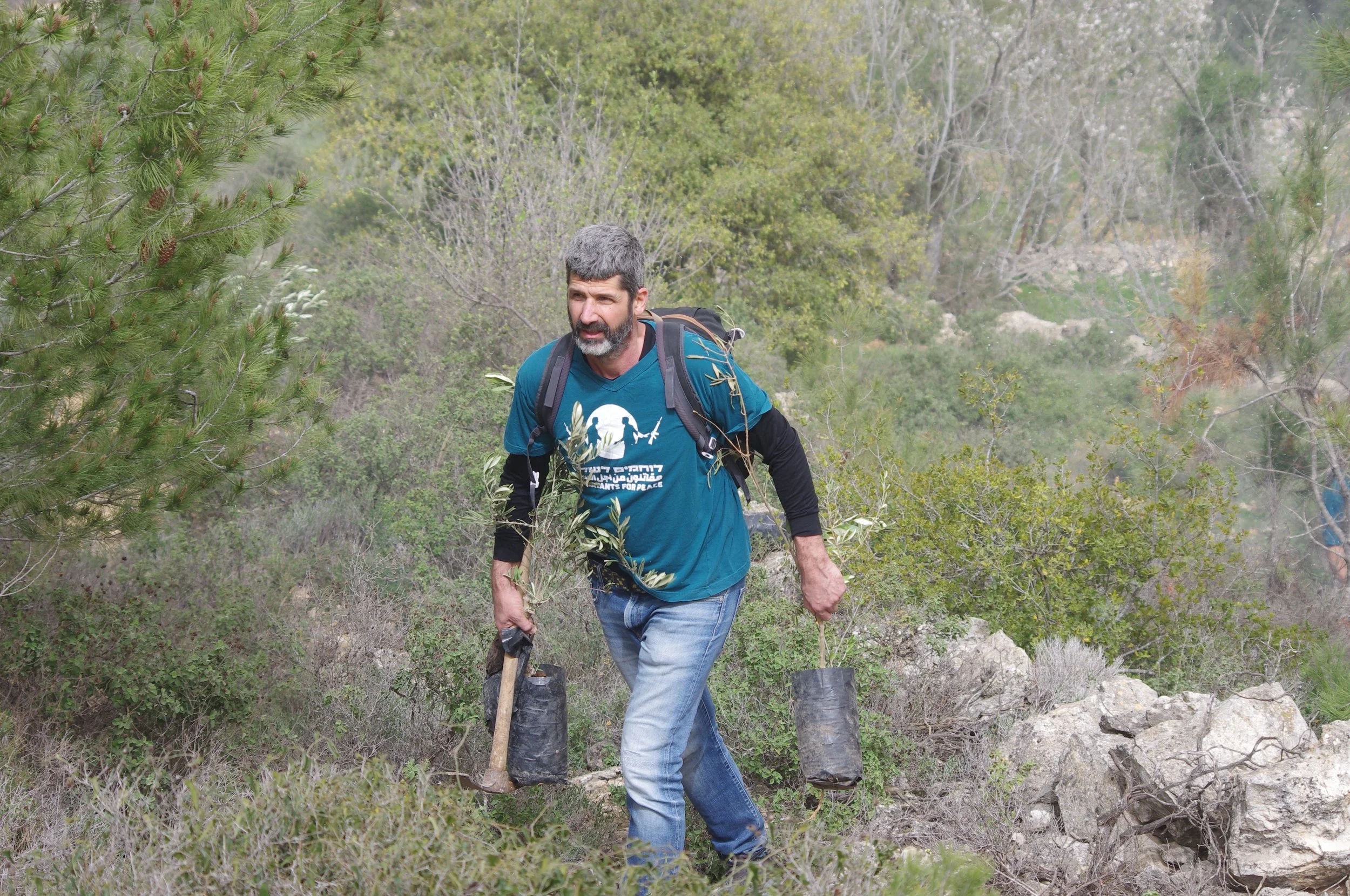
At the same time, it was clear to me that my opposition to the occupation was not enough, and that I must act in order to put an end to it. Together with a couple of friends, I took part in the series of meetings that were held in Bethlehem in 2005, and those meetings eventually led to the foundation of Combatants for Peace.
Ever since then, we have acted — Israelis and Palestinians together — to end the oppression, the violence, and dehumanization of the Other, with the belief that this is the only way we will see a better future for both peoples.