Ahmed Helou
“The only Israelis I had met before were soldiers, not civilians. I had never had a chance to talk with them about the future, about our rights.”
My grandparents left Gaza in the early twentieth century and moved to Be’er Sheva for professional reasons. My parents were born and grew up in Be’er Sheva. In the 1948 war, they tried to go back to Gaza, but decided instead to flee to Jericho because it was closer to the Jordanian border. They thought that if they were attacked, they could escape to Jordan.
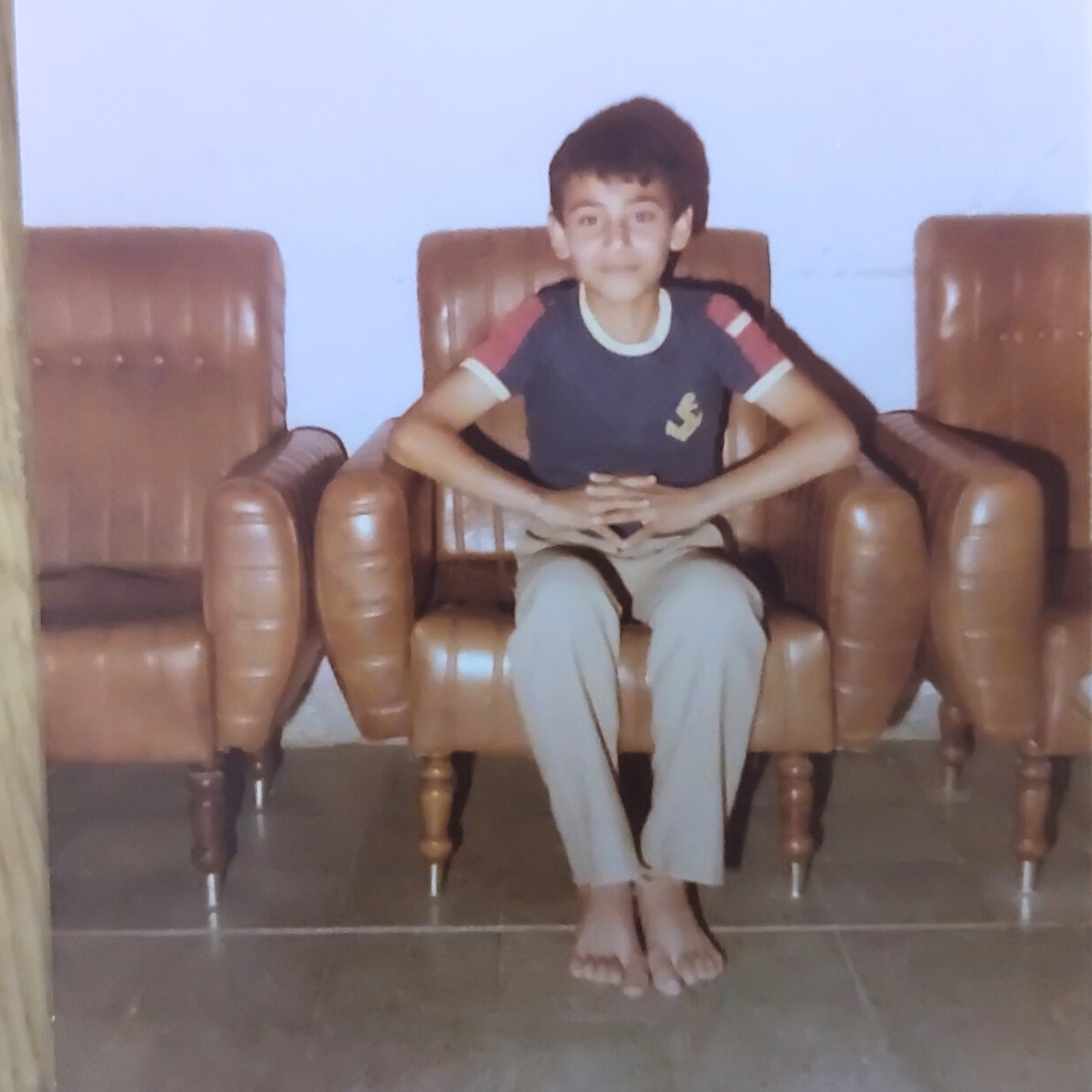
I grew up in Jericho hearing my grandparents’ and parents’ stories about the 1948 war and what they had to face when they fled Be’er Sheva. How many people were killed in front of them, how many bodies they came across. I also heard my parents’ stories about the 1967 war when they fled to Jordan. It was a difficult trip: they saw people being killed in front of them while they were crossing the Jordan river. All these stories made me angry at the Jews and made me want revenge.
I felt patriotic and decided from a very young age that I would become a strong fighter, to achieve vengeance and protest against the occupation. I was 10 years old when Israel invaded Lebanon in 1982. I started collecting tires and use them to block streets. My tools were stones and tires. I was thinking about revenge and violence.
When I turned 15 years old, I joined the local branch of Hamas. I threw stones at soldiers and sew Palestinian flags when they were illegal. If the army caught someone in possession of a Palestinian flag, it would result in a prison sentence of three to six months without a trial.
In 1992, I was sentenced to seven months in prison and became a political detainee. In prison, I had the opportunity to meet people who had different visions of the future. The Oslo peace process also started while I was in jail. My parents came to see me and told me about the possibility for a two-state solution. It finally became legal to fly the Palestinian flag. I saw it as a real chance for peace.
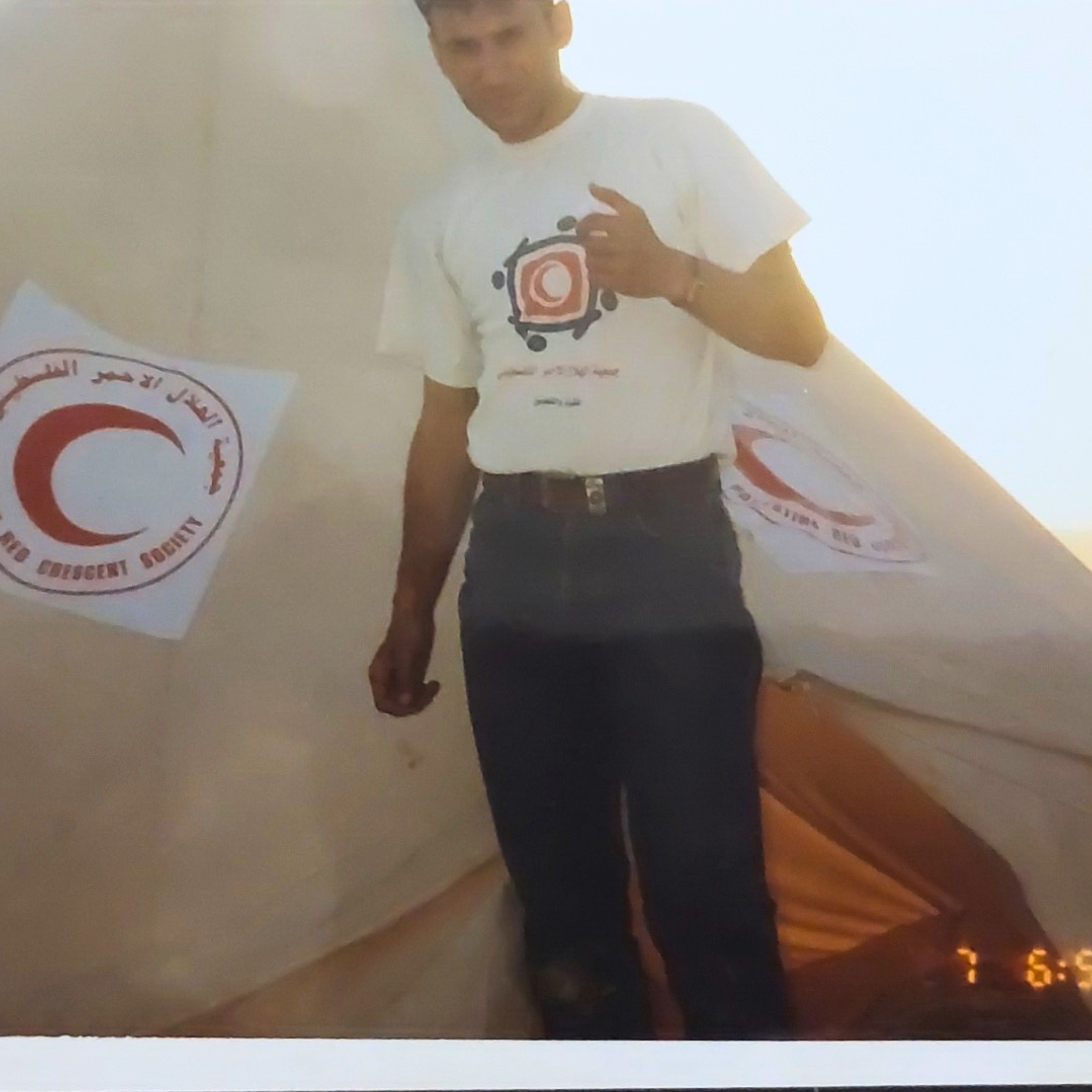
Upon my release, I created a youth group to help my city and society. We started working as volunteers in schools, hospitals, and nursing homes. I took a first aid course, and became a volunteer ambulance driver in the Palestinian Red Crescent.
During the 1996 clashes in East Jerusalem, I provided medical aid to many wounded Palestinians. I ran once to help an unconscious man who happened to be my close friend Firas, from Jericho. I lifted him and began running towards the ambulance. I was shot in my back by an Israeli soldier and collapsed on the spot. On my way to the hospital, I fell in and out of consciousness. In one terrible, lucid moment I heard the doctor ordering the paramedic to cease the revival efforts of the second patient in the ambulance — my friend Firas.
When I came back to Jericho, I asked my family about my friend. My brother told me that he passed away that day. He took me to the cemetery. There were four graves, one for my friend who was 21 years and studying law in Jordan, another for a 17 year old kid, and a third for a Palestinian policeman. These three guys had been killed on the same day that I got injured.
A fourth grave was empty. I asked my brother who was that grave for. He told me that they had dug it for me because they thought I would not survive. After six months of rehabilitation, I slowly began to walk again, though the bullet is still lodged in the back of my neck to this very day.
I carried on with my life until 2004, when my friend asked me to participate in a workshop with Israelis. I was shocked and started shouting at her. “How could you ask me to meet my enemy? To meet the people who killed my people? Who took my land? Who made me a refugee? Who put me in jail and occupied my hometown? How could I meet these people?”
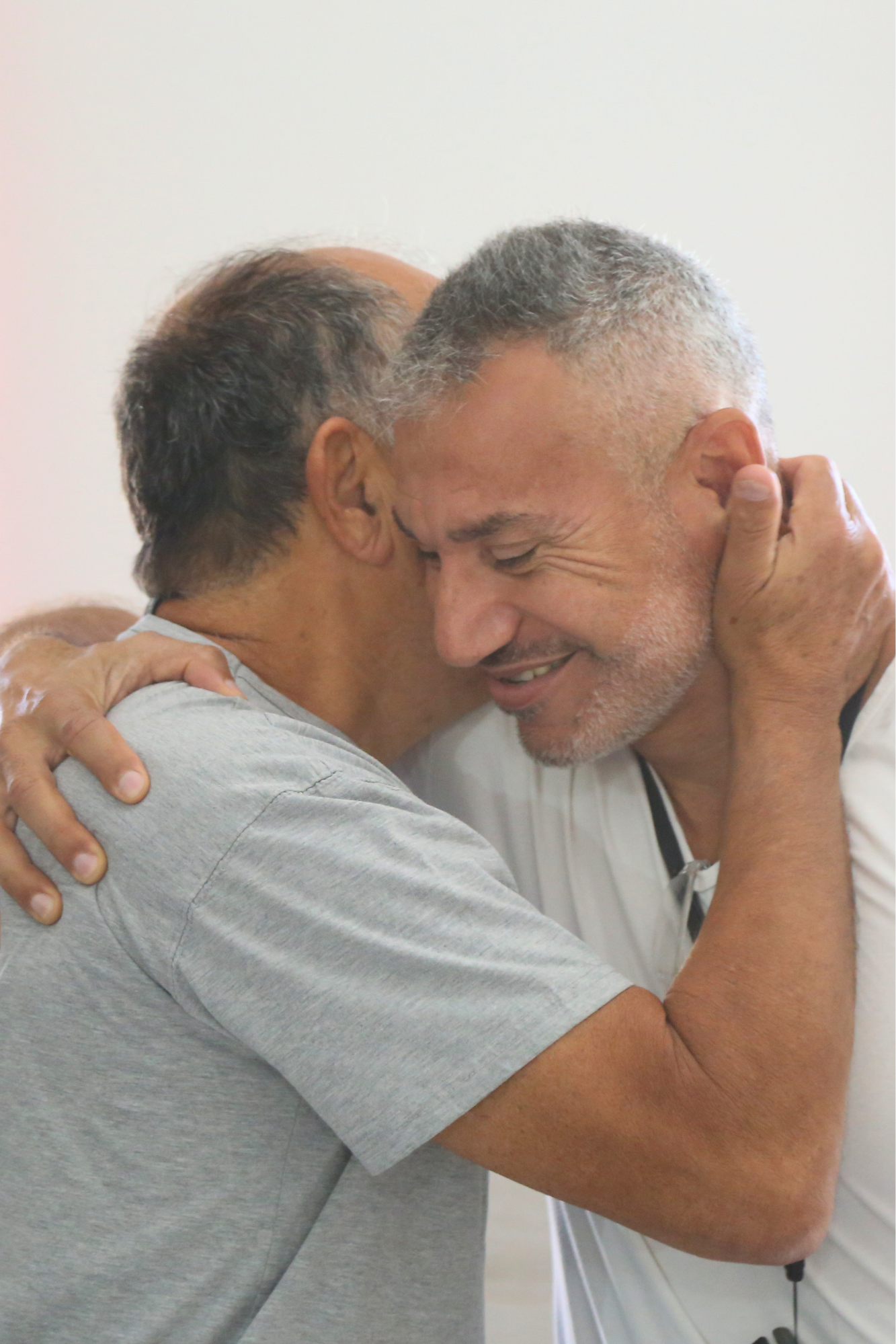
I decided to go, but to not talk with them. On the first day, I did not speak with anyone. On the second day, I started talking with people. On the third day, we drank and smoked together. And on the fourth day, I asked them whether they were really Jews and Israelis. The only Israelis I had met before were soldiers, not civilians. I had never had a chance to talk with them about the future. I finally had the opportunity to talk about human rights, Palestinian rights and two states. I also wanted to know more about the other side, to make relationships, to understand them.
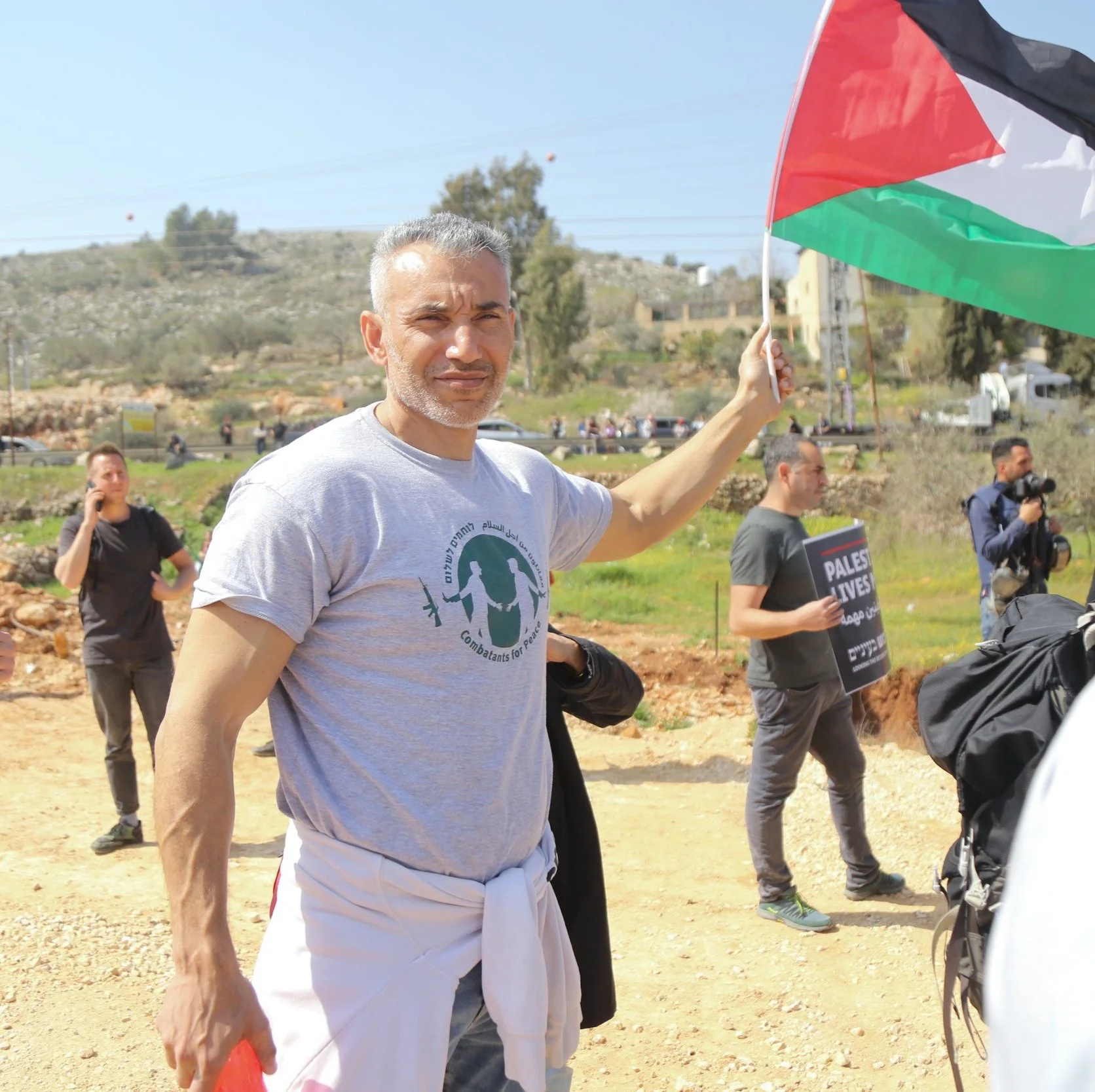
In 2006, I got a chance to meet Combatants for Peace in Jericho but did not join. I thought I did not have enough knowledge or information about the other side. I needed to discover things by myself, so I continued to go to workshops where I met internationals and Israelis.
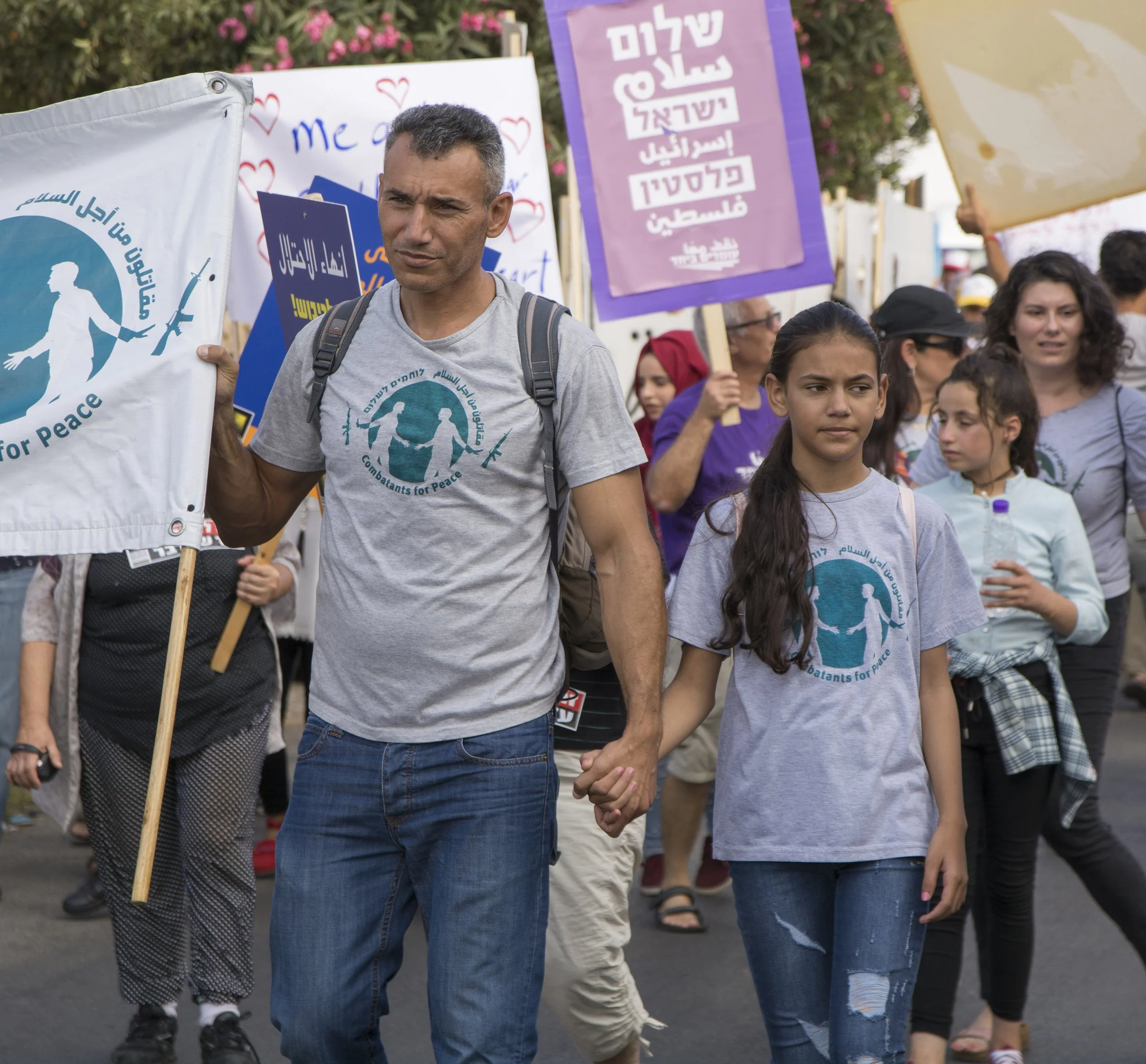
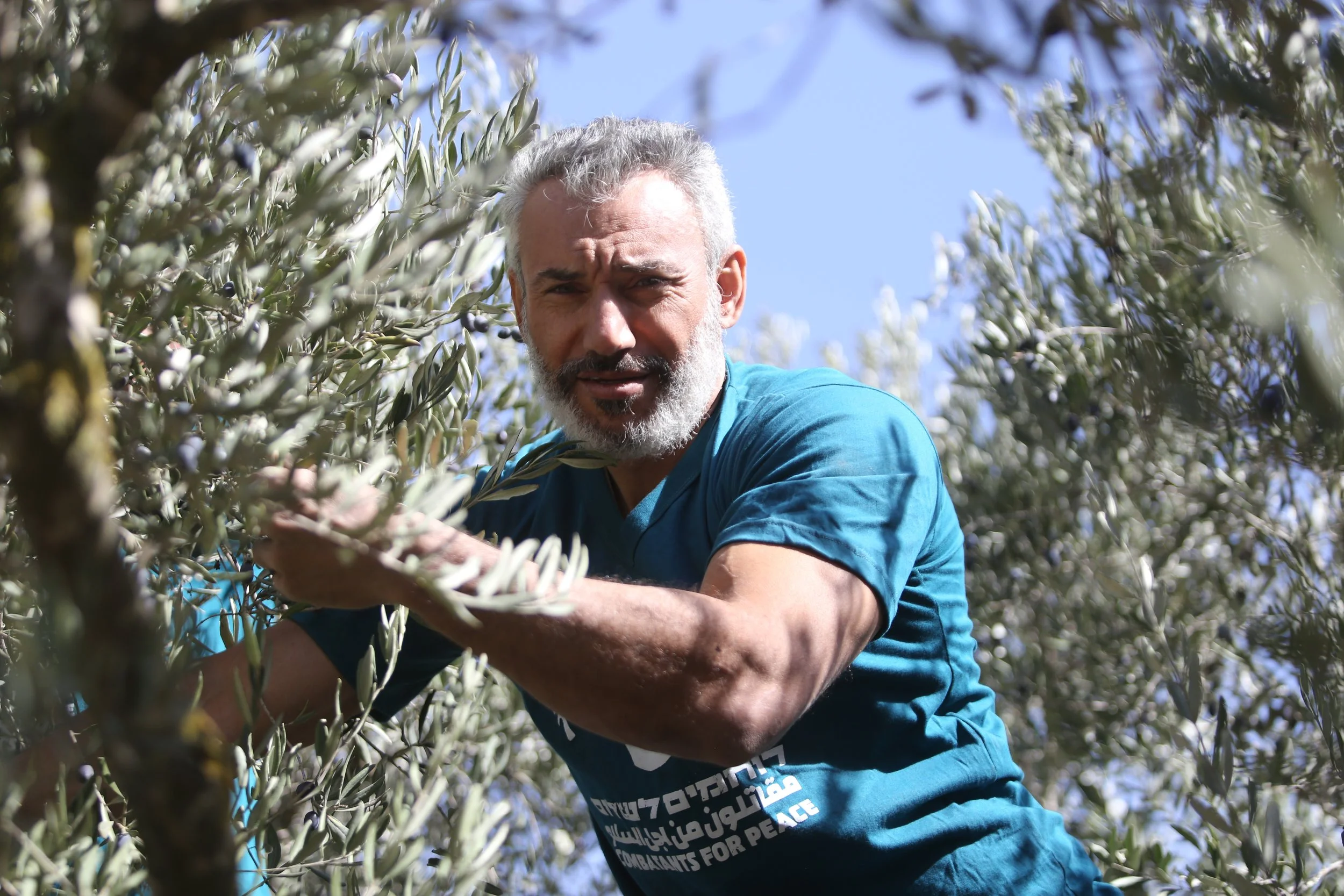
In 2013, I got an invitation from Combatants for Peace to give a speech at the Joint Memorial Ceremony. After that, I became a member and started protesting the occupation alongside my Israeli friends.
At the age of thirty I married Hiba, who is also originally from Gaza. Our four children have never met their grandparents. My wife and I have lost many relatives to the numerous Gaza wars, more than 60 relatives since 7 October 2023. But I know that binational cooperation is the only way to end the occupation and achieve peace.