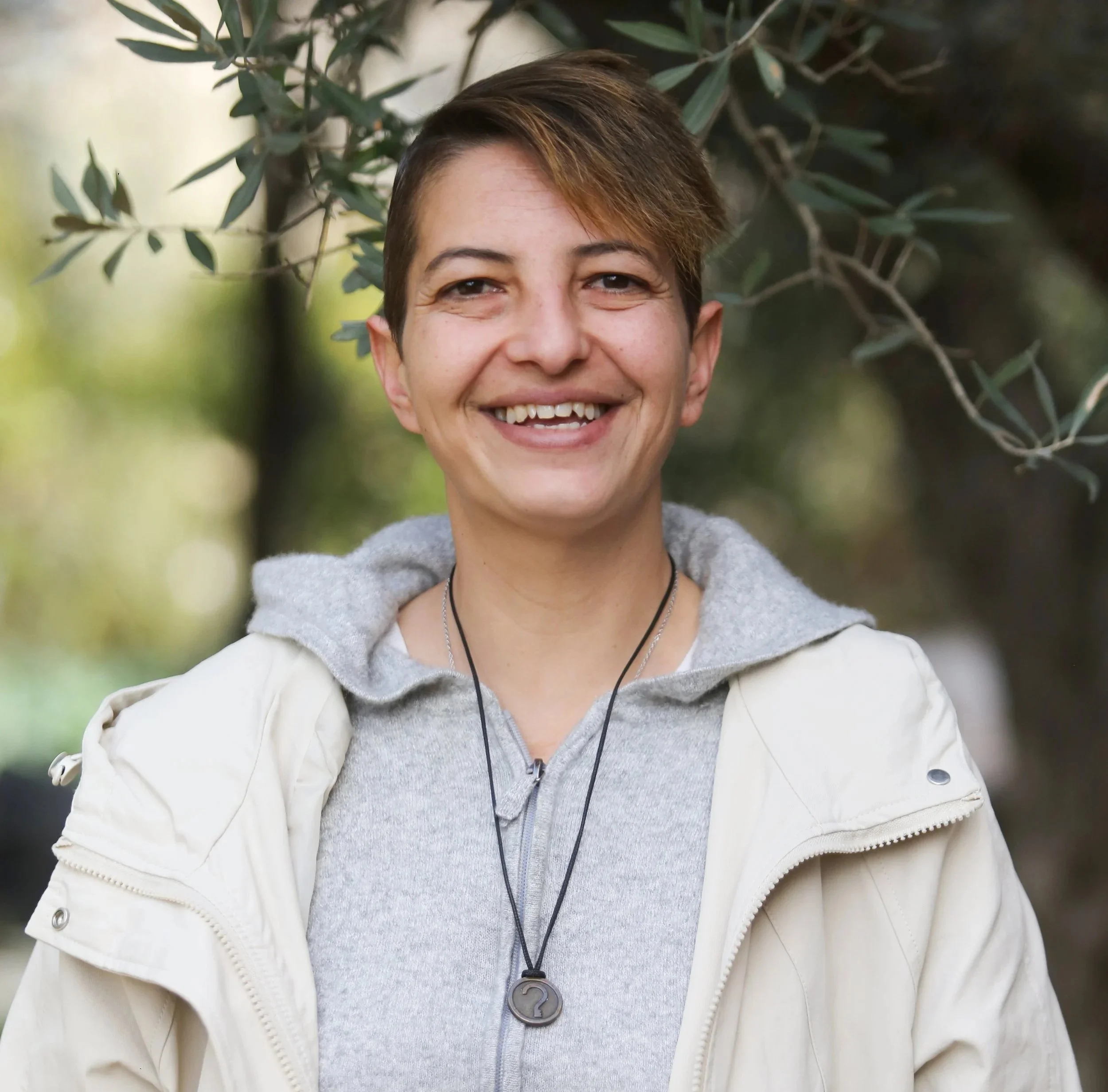
Mai Shahin
“I had carried one understanding of resistance for years because it was the only one I knew.”
I grew up in Al-Eizariya, in East Jerusalem, during the First Intifada. Since I was a child, occupation was never an abstract political reality. It entered our homes, restricted our movement, shaped our relationships, and determined how close we could be to the people we loved. My father is from the West Bank; my mother, Muna, is from Jerusalem. The occupation separated my parents from places and connections around the Mount of Olives that should have belonged to their shared life. In 2002, the separation wall reshaped our landscape even more, and today that same reality reaches into my relationship with my daughter. Aram is in Jerusalem, I am in the West Bank.
Across three generations 一 my mother, myself, and my daughter 一 I see how occupation reaches beyond land. It enters our homes, our relationships, and our most intimate experiences of love. My resistance is also for a future in which Aram will not inherit separation as destiny.
My mother taught me that freedom is not only the struggle against oppression; it is also the healing of the wounds oppression leaves behind. I did not arrive at this understanding easily. During the Second Intifada, I joined the violent struggle. I wanted freedom and dignity for my people, and I believed violence was the only way to confront the occupation. I did not set out to kill or harm anyone, but at the time, I could not imagine another path. I thought that the only way to meet the tremendous violence of the Israeli occupation was for me to reflect that same violence onto Israeli soldiers.
My mother’s wisdom stayed with me, even before I fully understood it. Eventually, I trained as a therapist and began exploring how we can meet pain without denying its causes. I came to understand that healing does not mean adapting to injustice or making peace with oppression. It means refusing to let injustice decide who we become. For me, healing became part of resistance: a way to face the wounds of occupation while continuing to struggle for freedom.
Then, in 2012, I received an invitation to interpret at Ecome, a joint community. Before I could say yes, I had to face my own demons and return to the questions I had carried for years. I went to my mother and told her: “What does it mean if I go and interpret in a joint community? What about normalization? What about my dignity? What about my political resistance? What does it mean to sit with Israelis when my people are still living under occupation?”
My mother listened. Then she told me something I have never forgotten: “It’s okay. Don’t go. But don’t ask why there is no change.” Her words did not erase my questions. They made me responsible for answering them through my own life. So I went.
During an intensive NVC training at Econome, I was working as a translator when I found myself translating the story of Sulaiman Khatib. As a child, I had learned about Sulaiman, a 14-year-old from Hizma who stabbed two Israeli soldiers. Now he was speaking about his time in prison and how his understanding of resistance had changed. He shared his growing conviction that nonviolent resistance could be a path toward Palestinian freedom.
As I translated his words, something shifted in me. I had carried one understanding of resistance for years because it was the only one I knew. For the first time, I met Israelis beyond the world I had known through soldiers, weapons, interrogations, and checkpoints. I encountered Israelis choosing to resist the occupation and the oppression of Palestinians. This did not erase the injustice or the unequal realities between us. It did not make freedom and justice any less necessary. But it showed me that another kind of relationship was possible 一 and that resistance could take forms I had never allowed myself to imagine.
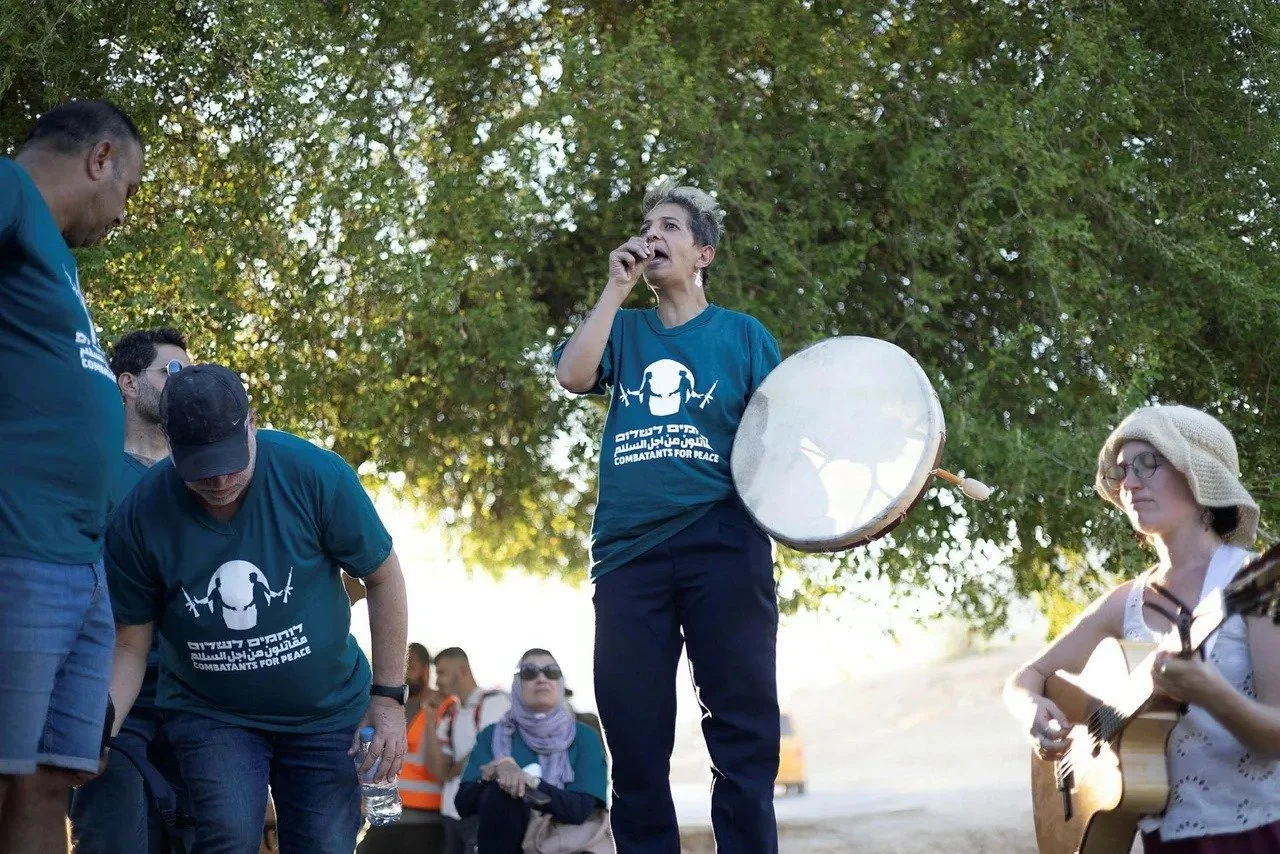
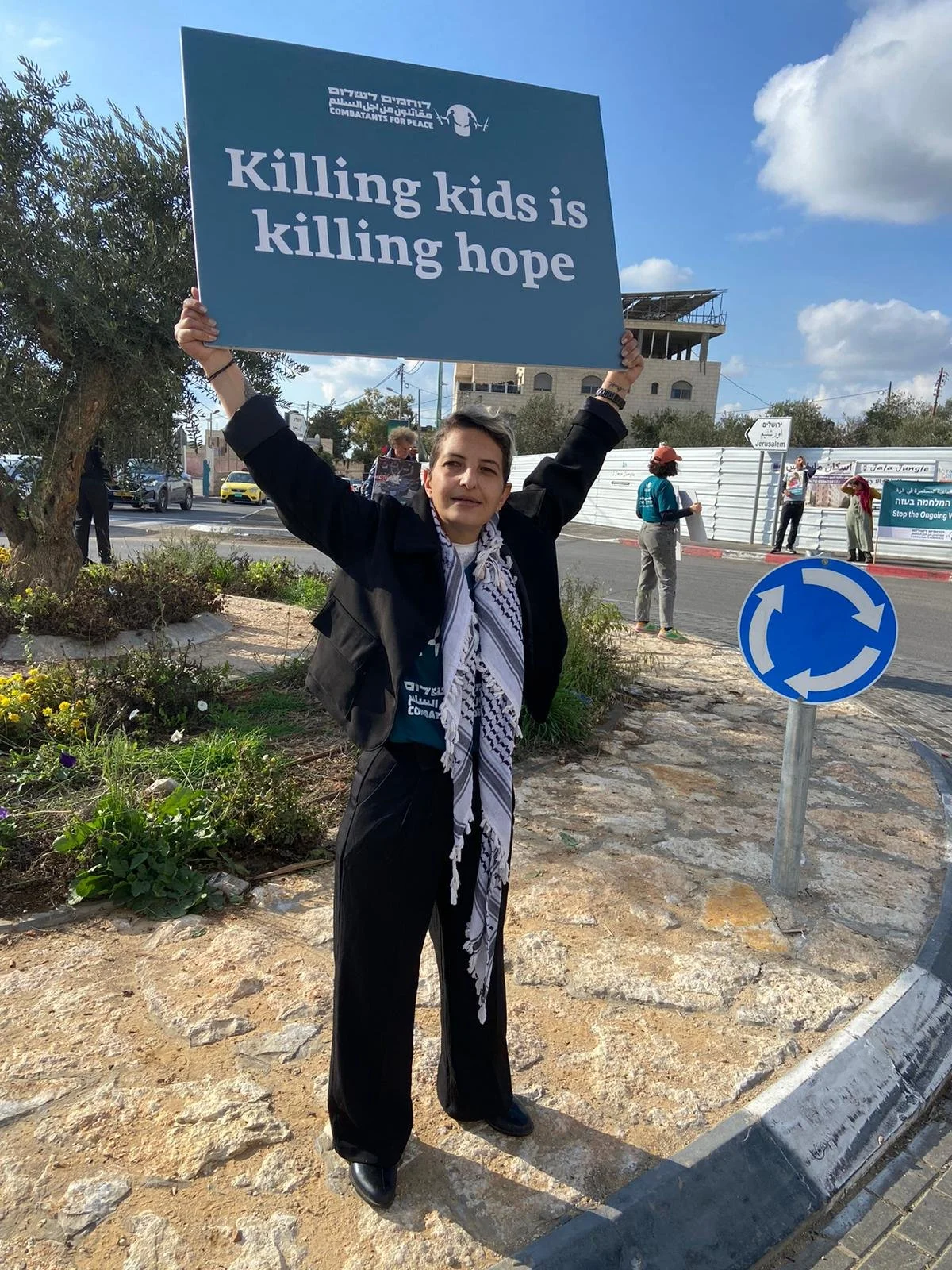
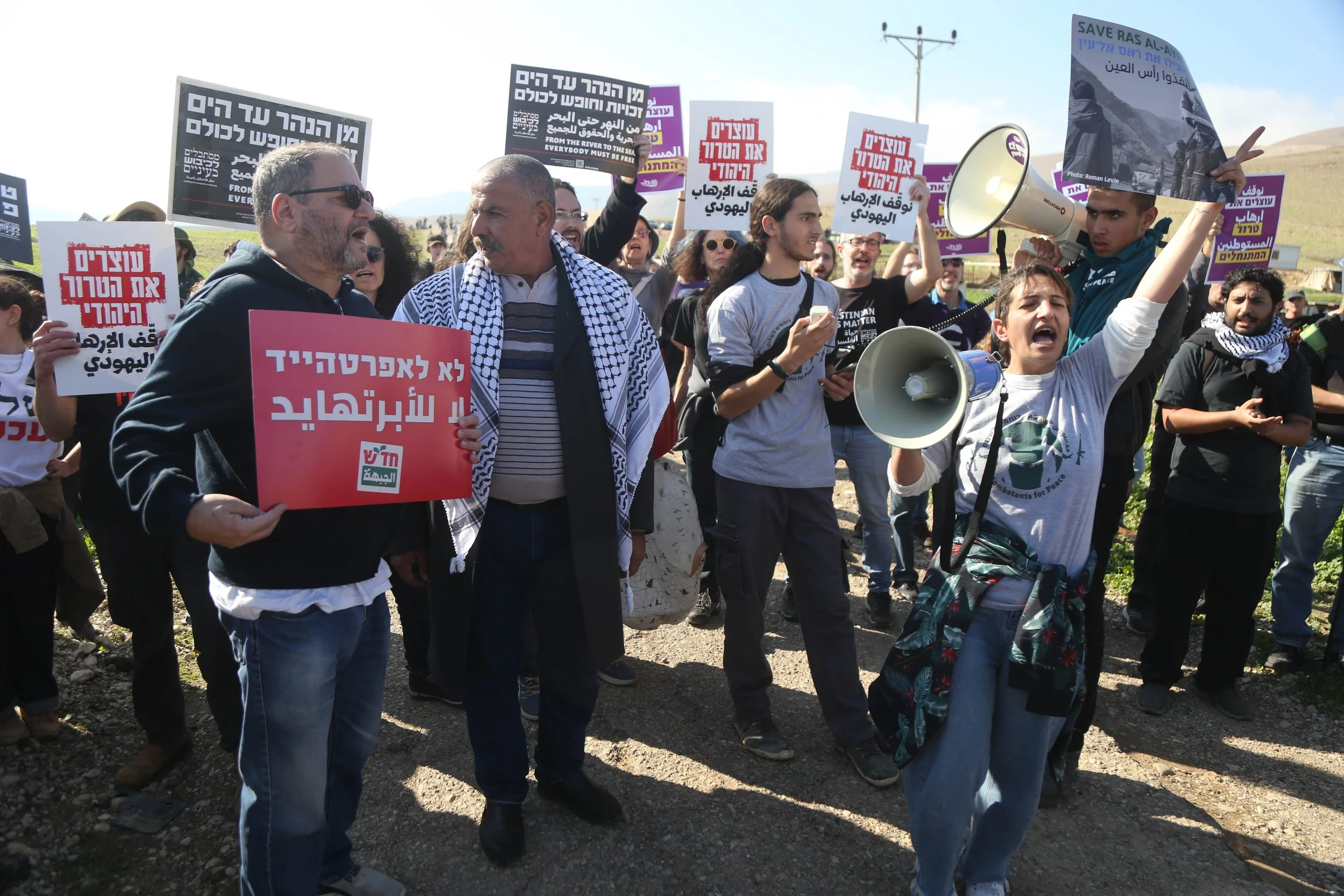
Ecome eventually closed, but the work continued. Today, I nurture Satyam Homeland, a joint community space where meeting, listening, and working across divisions become lived practice. I also joined Sulaiman at Combatants for Peace and continue to work toward a better future. Peace cannot be built by ignoring occupation or asking Palestinians to surrender their demand for freedom, equality, and dignity. A just future must confront oppression and transform the conditions that sustain it.