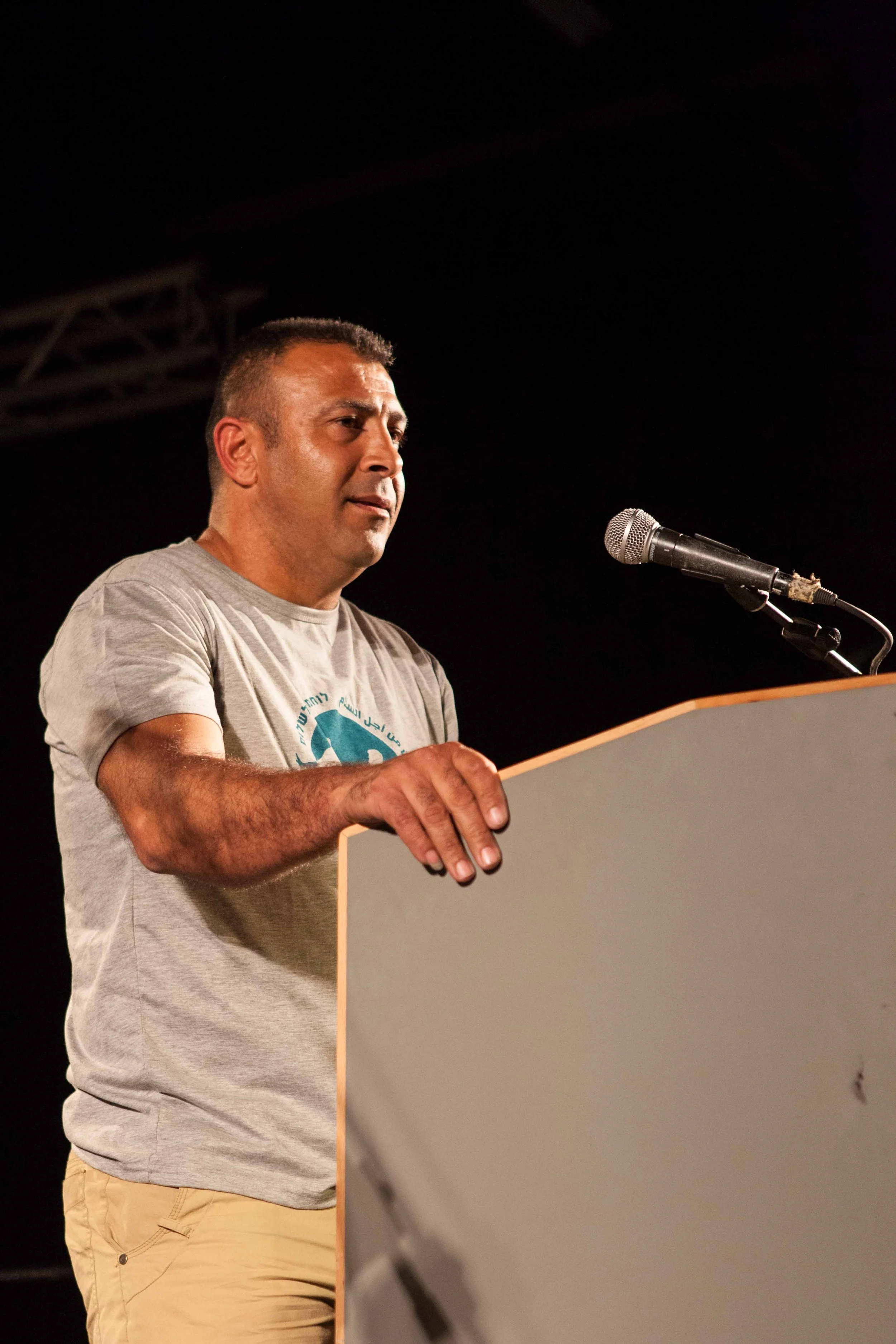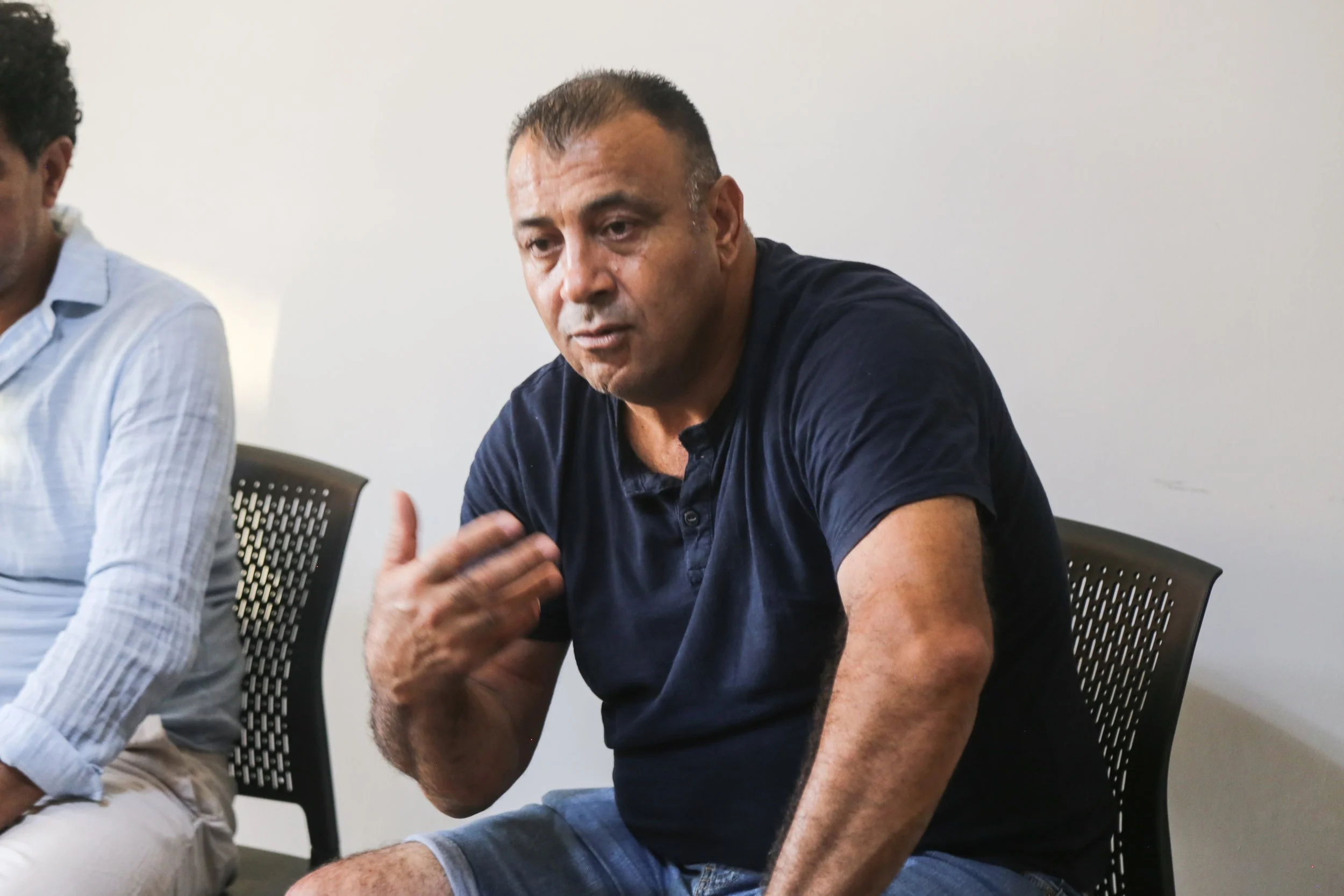
Jamil Qassas
“The tears of a Palestinian mother are no different from the tears of an Israeli mother. Blood has only one color.”
My family hails from one of the most beautiful Palestinian villages, Al-Qubayba. My story and my family’s suffering began with its ethnic cleansing in 1948. Because of the war, all the inhabitants chose to flee, except for my grandfather. He refused to run and was killed in his own home for it.
My family then moved to Hebron, the next closest city. They hoped that they would one day return to their village. But they never could and over the following years, our suffering only worsened. In 1967, my family was displaced for a second time. They fled to Jordan and tried to establish a new life there. This is where I was born in 1971. Soon after, two of my uncles joined the Palestinian Liberation Organization (PLO) in Lebanon and my mother decided to return to Palestine. We moved to a refugee camp near Bethlehem.
In 1982, one of my uncles was killed by the Israeli military when they invaded Lebanon. My other uncle watched him die and was forever traumatized. We also mourned for three days when we heard about the massacre of two Palestinian refugee camps near Beirut: Sabra and Shatila. There, 3,000 Palestinians were killed in only 24 hours. We started demonstrating and throwing stones at Israeli soldiers and settlers in our camp. Growing up, I experienced violent demonstrations in front of our house on a daily basis.
Every time stones were thrown at soldiers, they would enter our house and check everything, including us 一 my mother, my siblings and me. Beatings were a daily occurrence, and it terrified us. They would call my mother all sorts of terrible names. I once asked her: “Why are these soldiers here? Why do we not have an army to protect ourselves? Why can’t we go back home to our village?” I had many questions, but my mother gave me only one answer: “The Israeli army is occupying and controlling the Palestinian people.”
Years passed, and in 1987 the First Intifada broke out. I took part in the uprising by throwing stones and helping block streets. I wanted to take revenge on the soldiers who humiliated my mother and me. This was my way of expressing my anger. I became one of the most active protestors in the refugee camp and a leader in the demonstrations.
More than once as a young teen, I was shot with live ammunition. I was eventually caught by the army and put in administrative detention for six months. After my release, I found the refugee camp fundamentally transformed: the army had built a fence nine meters high around the streets and ordered a curfew from 5:00PM until 5:00AM.
Shortly after, my younger brother, then 14 years old, went out to visit our uncle, who lived barely 50 meters from our house. It was in the evening, past the curfew, and soldiers who were stationed in the alleyway surprised him. He got very scared and started running. The soldiers ran after him 一 and shot him. It was a “Dumdum” bullet, which explodes into shrapnel inside the body, destroying it from within.
My brother was transferred to a hospital in Jerusalem and when I entered the emergency room, I saw him lying in a pool of his own blood. He was dead. I didn’t know what to do. I felt as if the sky was falling on me. How could I tell my mother? I brought my brother’s body back to our camp in Bethlehem. On that day, I lost my brother, but I also lost my mother’s smile forever.
During the Second Intifada, there were regular suicide bombings in Israel. One day I came home to see my mother and brothers gathered around the television. There had been a bombing attack on a bus and many people were killed, including children. My mother was crying. I asked her: “Why are you crying, Mama? Those are Israelis who were killed, not us.” She looked at me and said, “Those kids who were killed have mothers. And those mothers will feel the same feelings and the same pain that we went through. The tears of a Palestinian mother are no different from the tears of an Israeli mother. Blood has only one color.” When I heard her reaction, I realized that my suffering was only a drop in the ocean compared to her own.
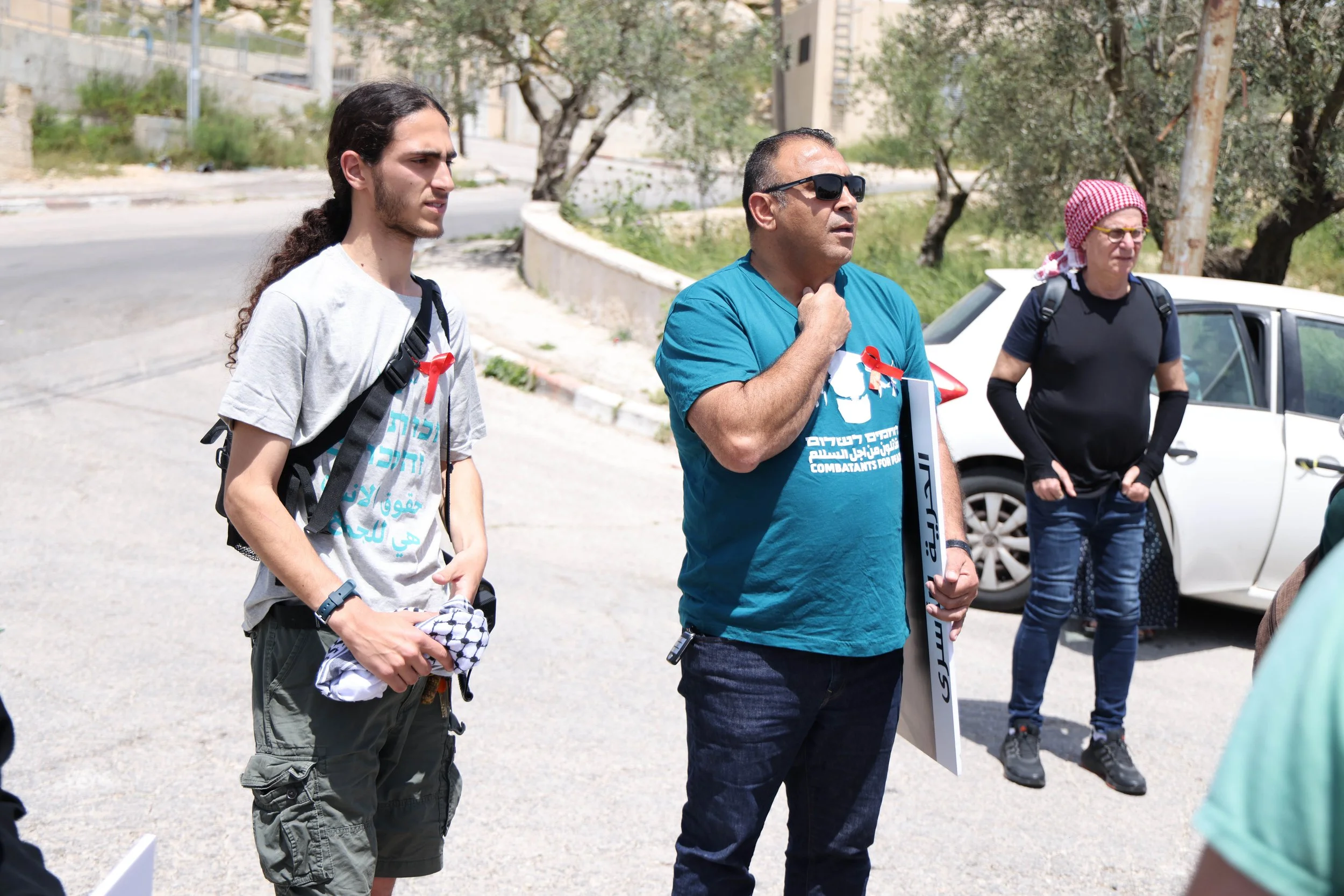
I first met Combatants for Peace during their Israeli Palestinian Joint Memorial Ceremony. I was amazed to see and hear the work they were doing. I joined the movement and became an activist soon after.
Today, I continue to fight for my people’s freedom, but I do so peacefully and alongside my Israeli friends. In Combatants for Peace, we work together, Palestinians and Israelis, for justice, peace and equality.